On the evening of September 26, 1960, American politics changed in a way few saw coming. With the Cold War shaping every corner of public life, John F. Kennedy and Richard Nixon met before roughly 70 million television viewers. It wasn’t just a debate – it was the moment television became a political force. This article examines the election’s tense backdrop, how each candidate performed, and why that single broadcast still echoes through every campaign that followed.
The Political Climate That Set the Stage
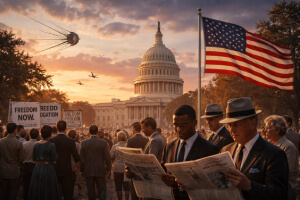
Back in those days, America was worried about the Cold War situation. The Soviet Union had launched Sputnik perhaps three years before, the Cold War was getting a bit hot, and there was also civil rights tension brewing from within. Voters wanted reassurance. Some thought a more hopeful America would again take control of its destiny, while others thought it was time for strong leadership to keep others happy.
Nixon brought his eight-year career and experience from within Eisenhower’s White House. Kennedy, sixty-three days out of 43, was offering a degree of newness – magnetism and the possibility of a new generation taking over. Given that the polls were showing a tie, it must have been mighty difficult for those undecided voters to think what to do.
How Television Turned Performance Into a Political Weapon
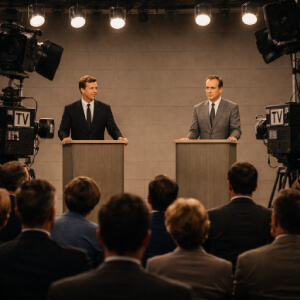
On the night of September 26, 1960, roughly 70 million Americans watched the first televised presidential debate in history. Kennedy appeared rested, tanned, and composed. Nixon, recovering from a knee injury and refusing makeup, looked pale and visibly strained under the studio lights.
Radio listeners actually tended to score Nixon the winner. Television viewers disagreed sharply. The same words landed differently depending on the screen. Image had become inseparable from the message itself.
After September 26, 1960, no serious campaign ever treated television as an afterthought again. Appearance, lighting, and makeup became strategic decisions. Candidates hired media consultants, rehearsed camera angles, and crafted concise sound bites designed for broadcast rather than ballrooms.
Every major campaign since has operated inside that reality. Ronald Reagan’s 1980 telegenic ease, Bill Clinton’s direct-to-camera warmth – both trace back to lessons learned watching Nixon sweat under studio lights while Kennedy looked composed and ready.
Television Changed Politics for Good
A stunning enlightenment brought about by the September 26, 1960, program could not be denied ever again: voters were not listening to arguments only, but also watching the behavior of candidates. For the first time, policy stance came second to composure, appearance, and self-belief under camera lights. The reason for the desirability of this notion of image management for any modern campaign, and of televised messaging and visual branding, passed through that lone broadcast in Chicago. The debate was not an introduction to television politics – indeed, it proved that television and politics were inescapable to each other.